
AI Interview Coach
Ace Every Interview.
AI-powered preparation for System Design, DSA, Behavioral, and GenAI rounds. Practice with expert personas that adapt to your level.
Real-time AI coaching
FAANG-level difficulty
Live code execution
AI-powered preparation for System Design, DSA, Behavioral, and GenAI rounds. Practice with expert personas that adapt to your level.
Professional diagrams across 11 categories. Click any to deep-dive.
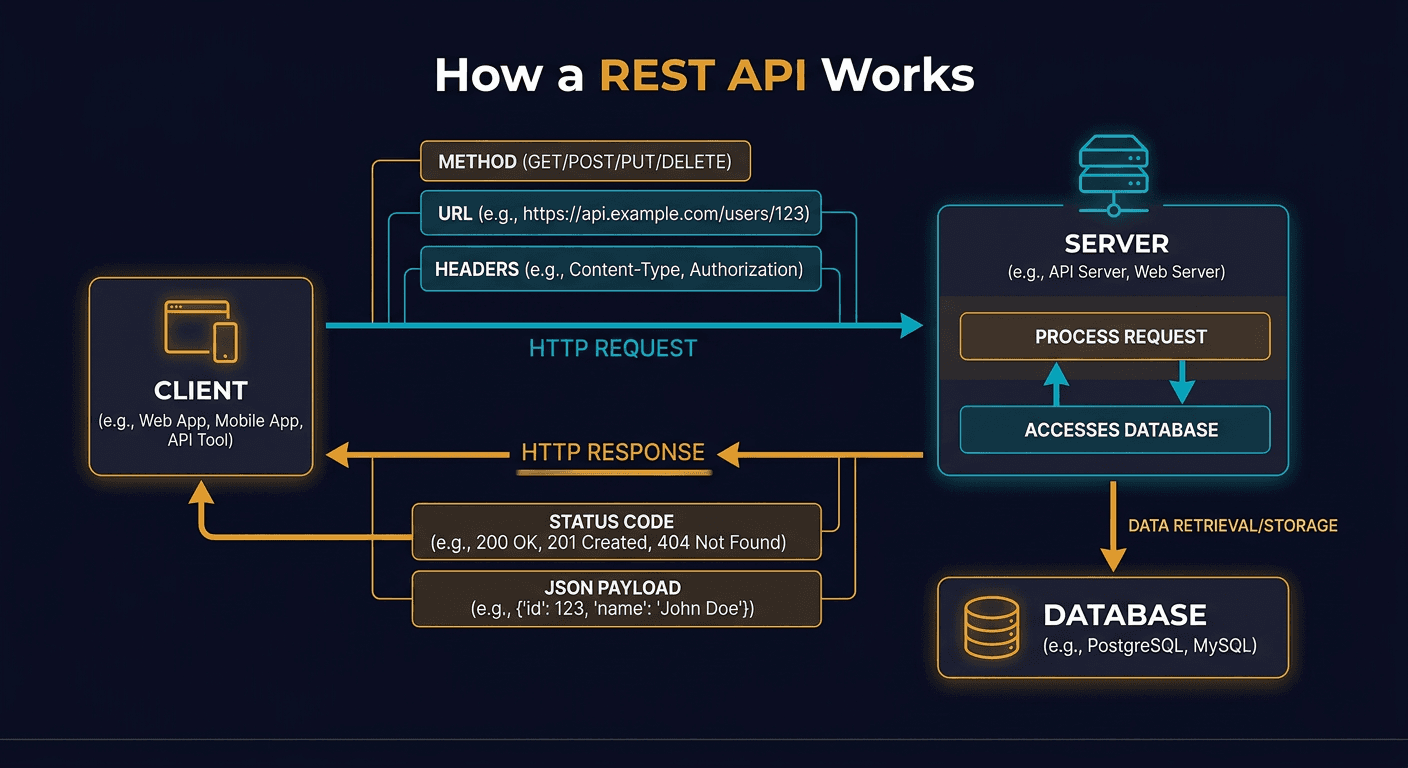
REST APIs enable decoupled client-server communication by adhering to architectural constraints like statelessness and uniform interface. They facilitate scalable data exchange using standard protocols and data formats.
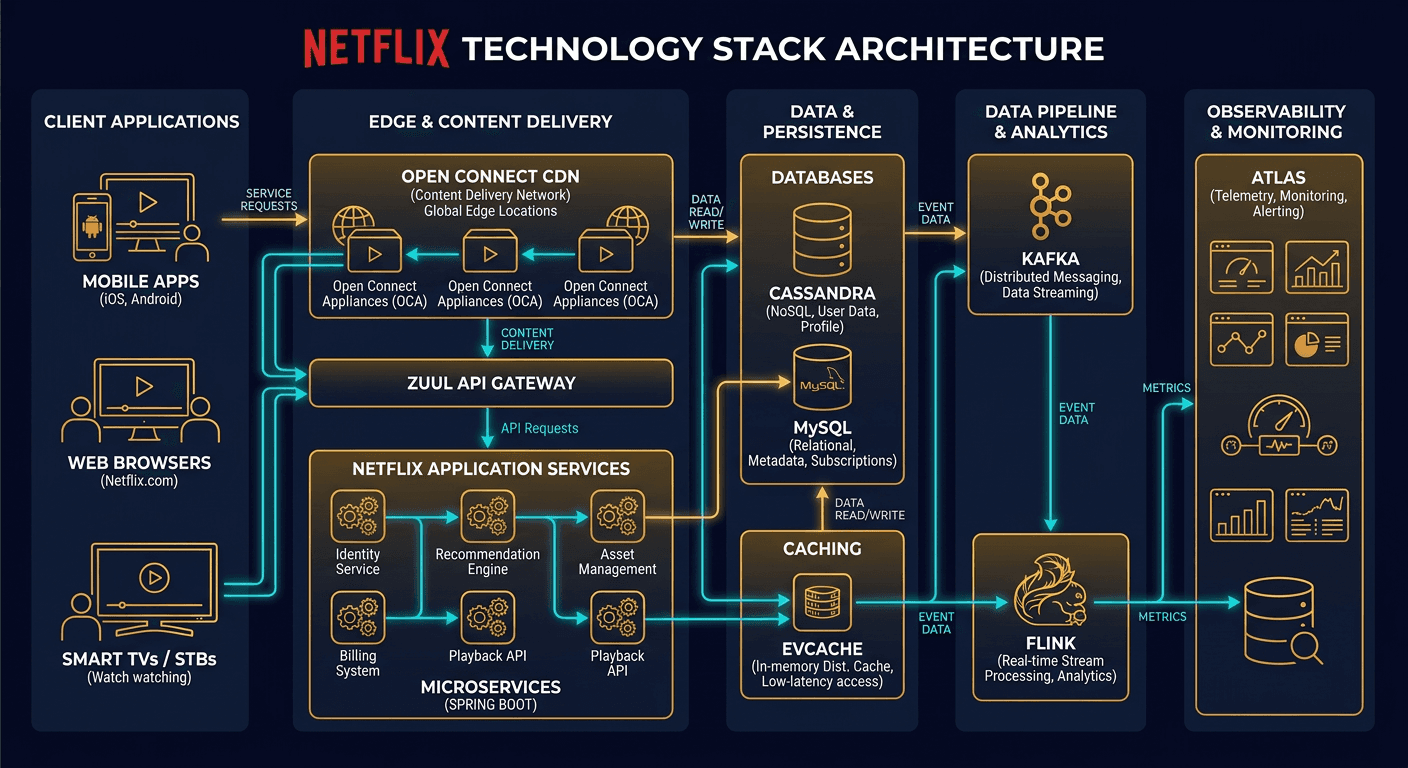
Netflix's architecture prioritizes high availability and low latency for video streaming at a massive scale, employing a microservices architecture and a globally distributed content delivery network. Their tech stack emphasizes fault tolerance, scalability, and personalized user experiences through sophisticated data processing and recommendation algorithms.
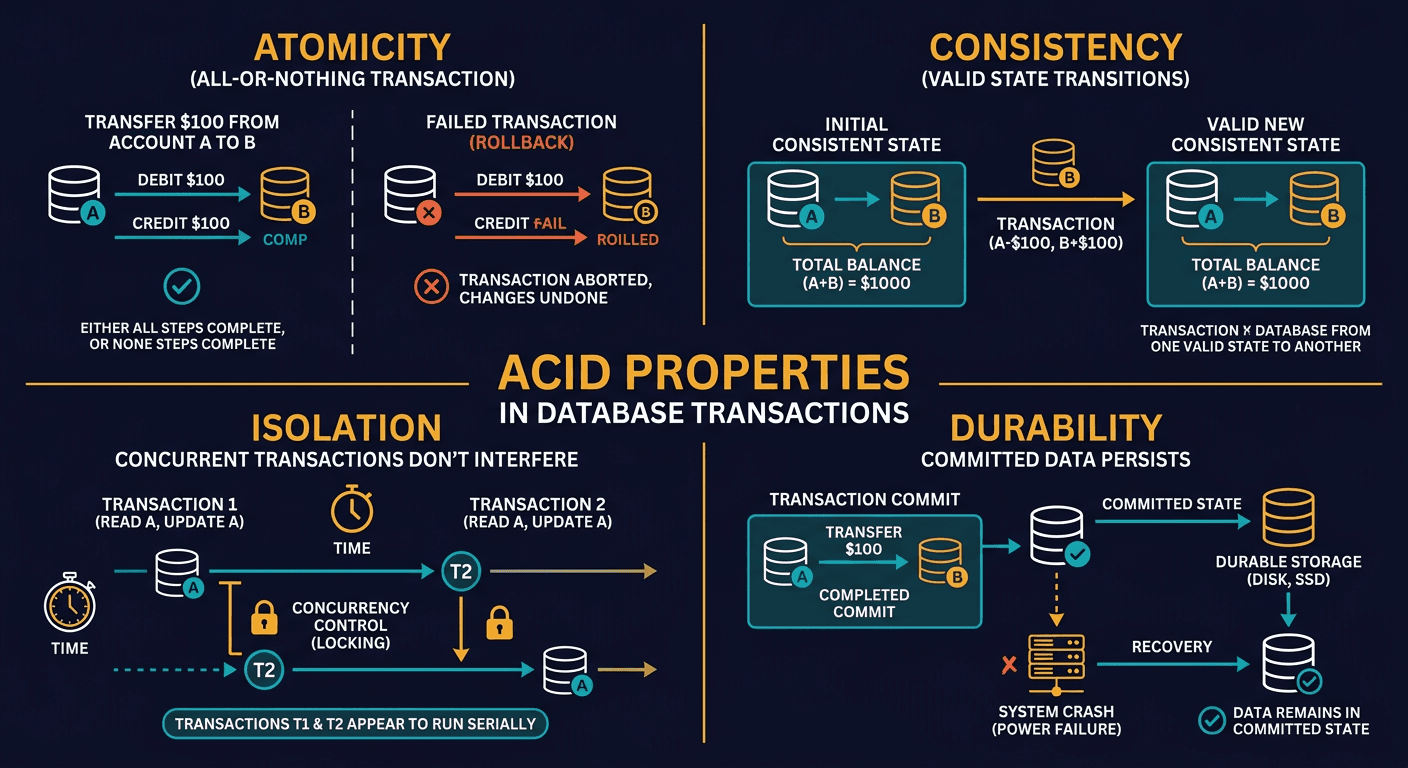
ACID properties (Atomicity, Consistency, Isolation, Durability) are a set of guarantees ensuring reliable database transactions and data integrity, especially in the face of concurrent operations and system failures. Understanding their trade-offs is crucial for designing robust and scalable data storage solutions.
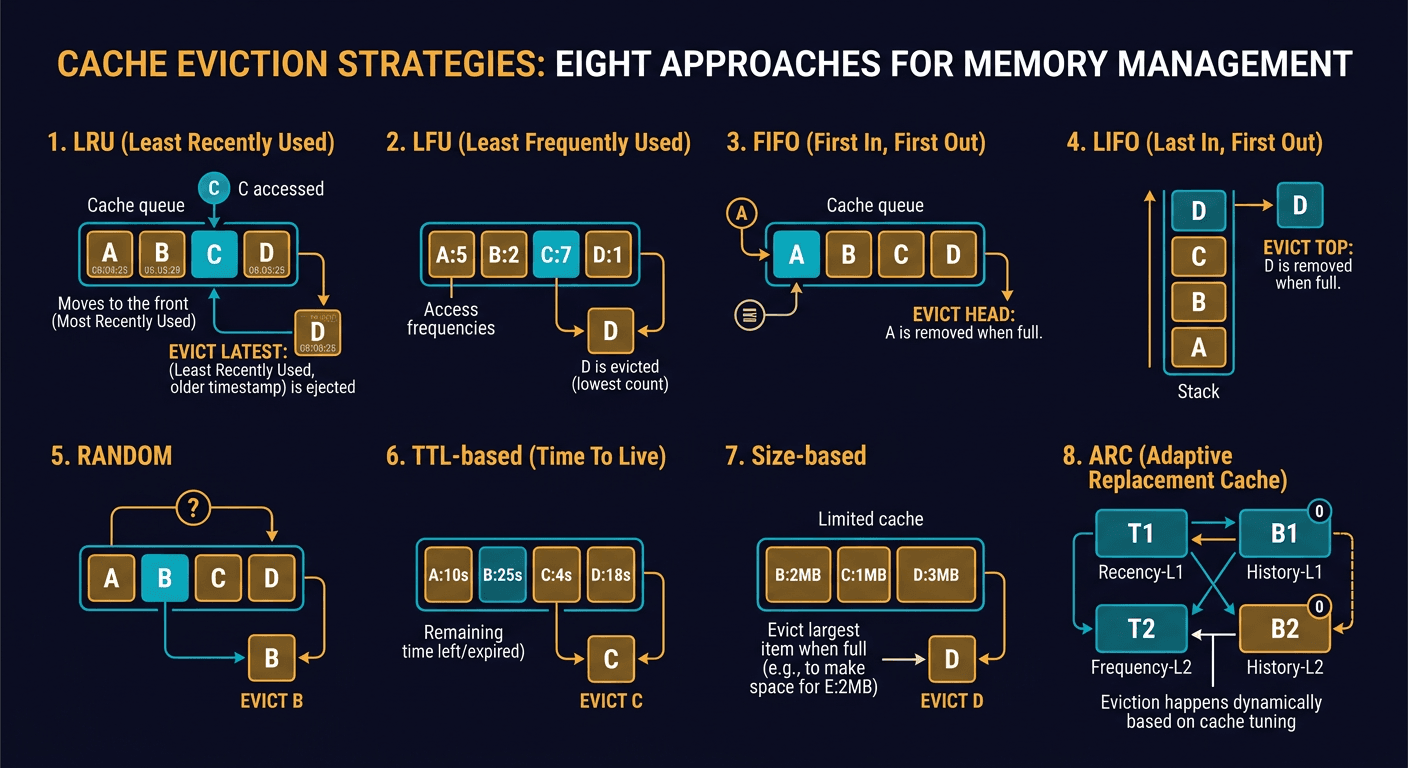
Cache eviction strategies determine which data is removed when a cache reaches capacity, balancing hit rate, overhead, and staleness. The choice impacts performance, cost, and resilience, requiring careful consideration of access patterns and data characteristics.
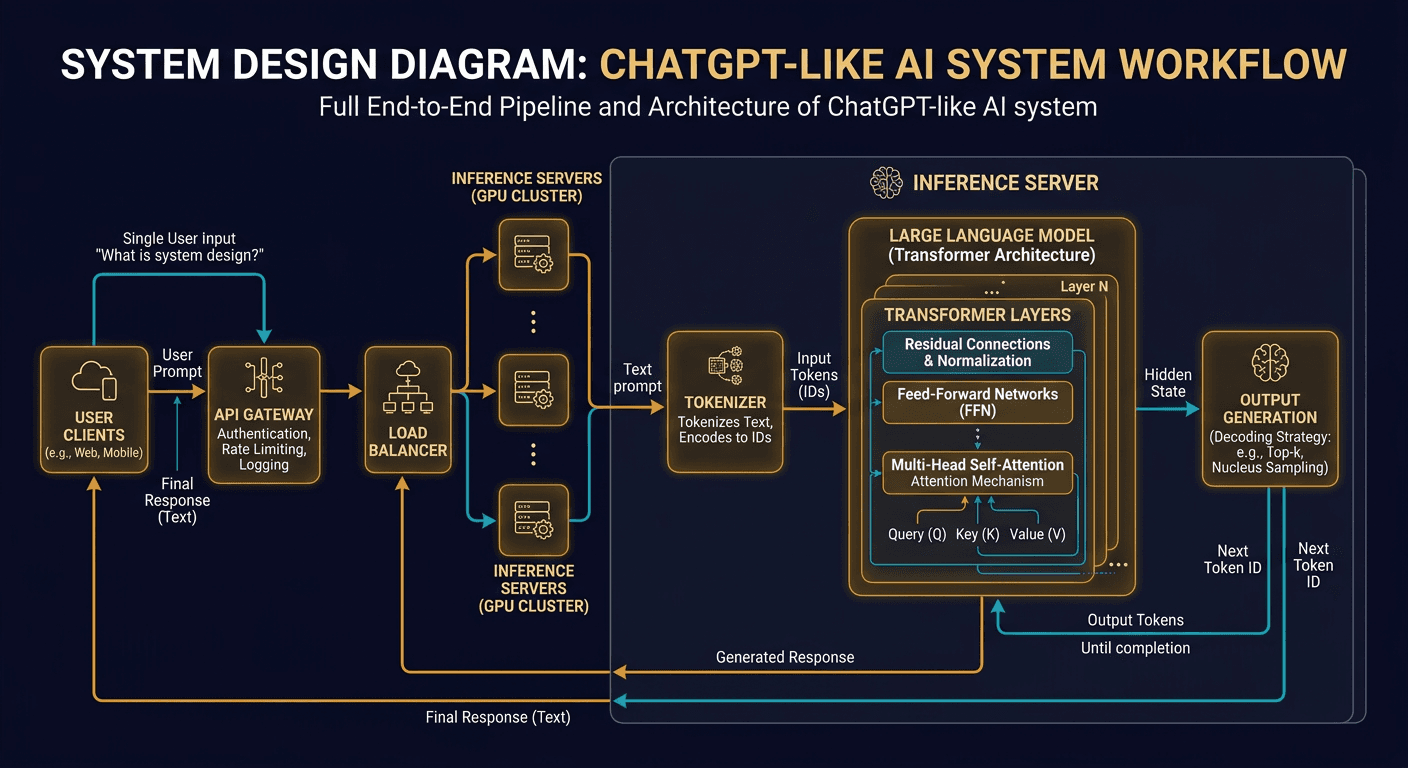
ChatGPT-like systems balance massive-scale language modeling with real-time inference and stringent safety constraints. They utilize transformer architectures, reinforcement learning, and content moderation to generate helpful and safe responses to user prompts.
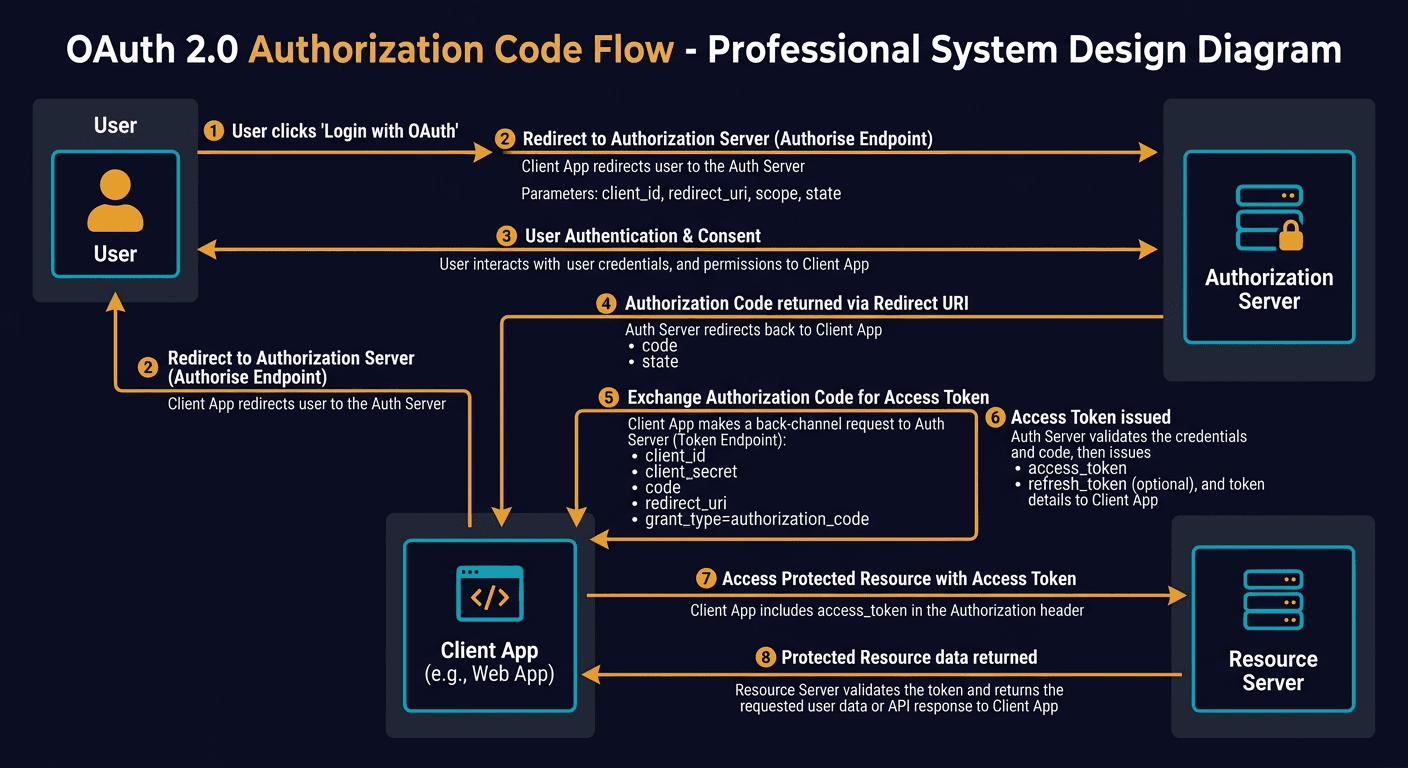
OAuth 2.0 addresses the challenge of granting applications limited access to user resources without exposing sensitive credentials. It defines a standardized authorization framework, enabling secure delegation of access rights.
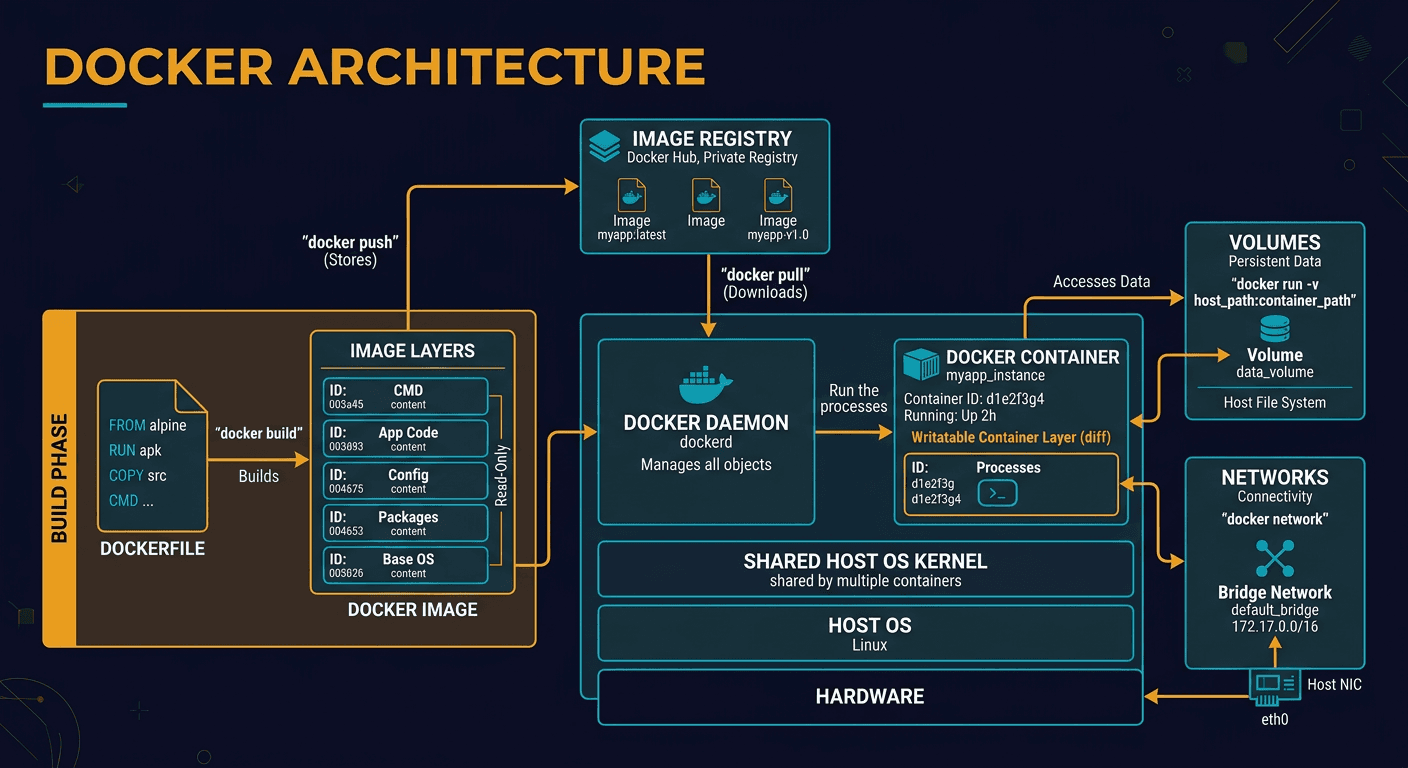
Docker solves the problem of inconsistent software execution environments by packaging applications and their dependencies into isolated containers. It leverages OS-level virtualization features to ensure applications run the same way regardless of the underlying infrastructure.
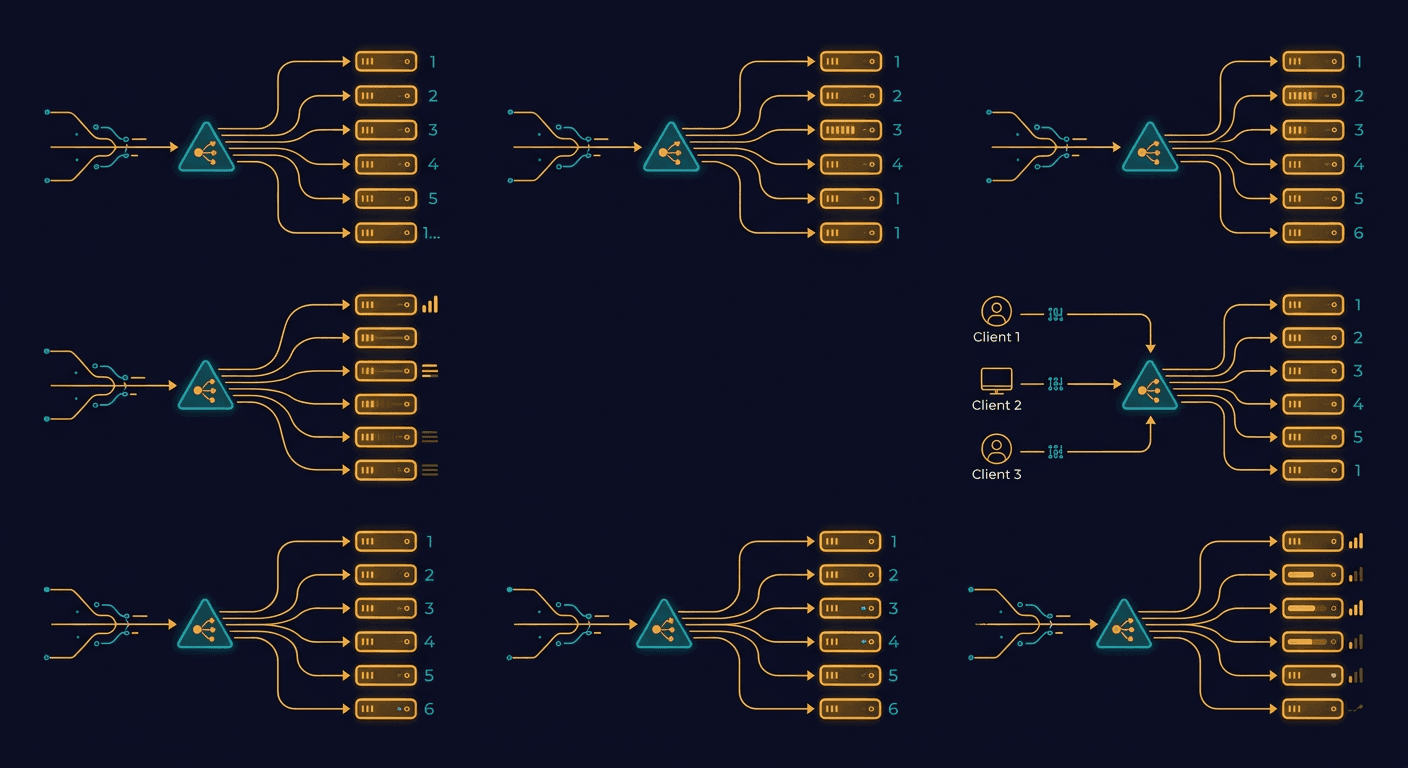
Load balancing algorithms distribute network traffic across multiple servers to optimize resource utilization and ensure high availability. The selection of an appropriate algorithm directly impacts performance metrics like latency, throughput, and fairness.
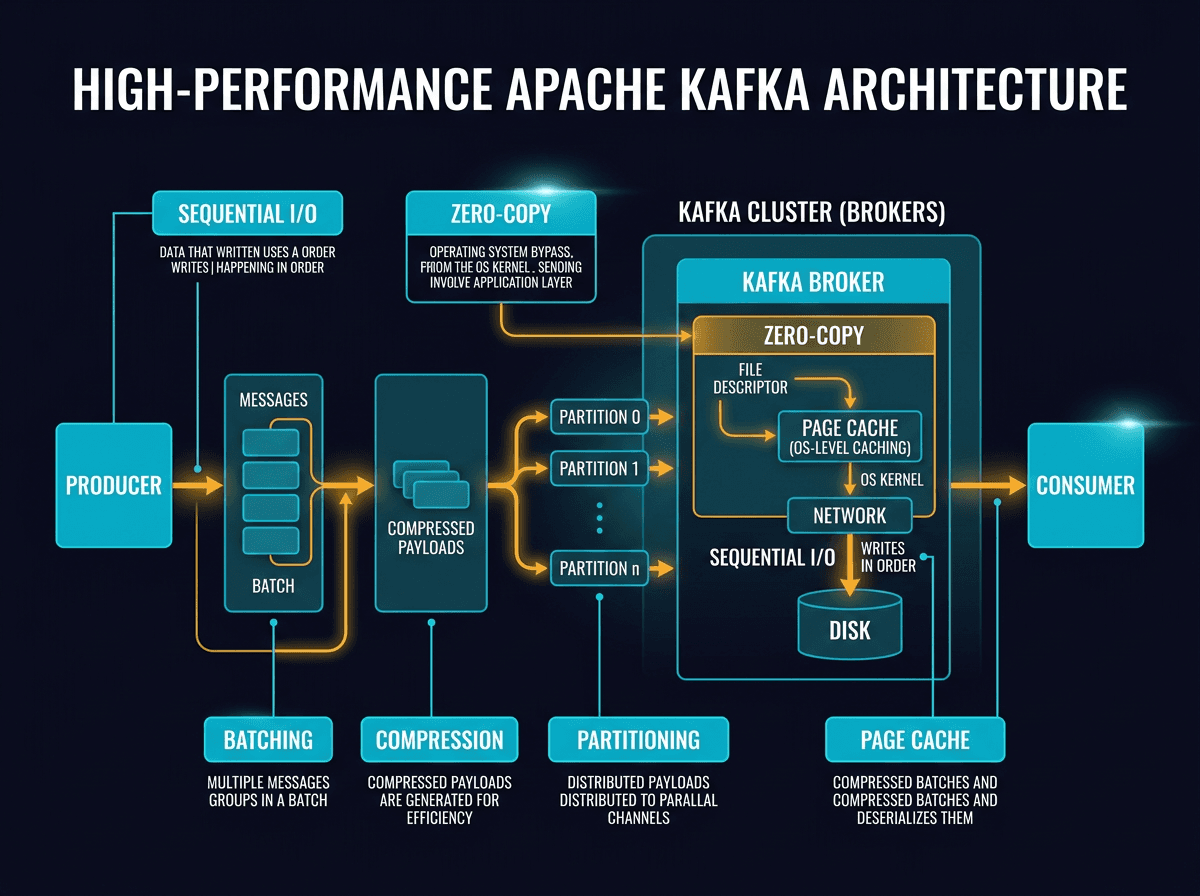
Kafka's speed stems from a combination of sequential disk I/O, zero-copy data transfer, and efficient batching, minimizing latency and maximizing throughput. Its distributed architecture and reliance on OS-level caching further contribute to its performance.
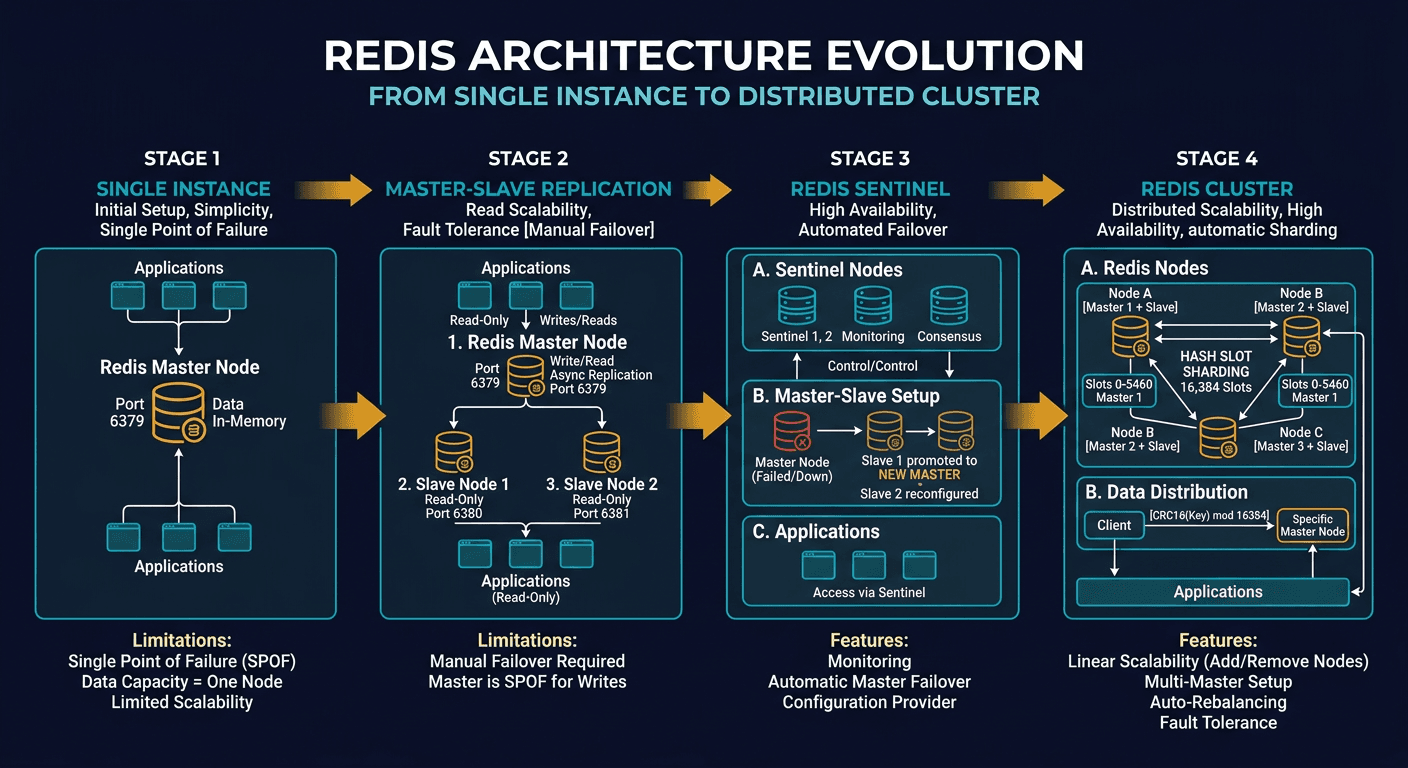
Redis evolved from a single-instance, in-memory data structure server to a distributed data platform to address limitations in data durability, read scalability, and overall capacity. These architectural changes introduced complexity, requiring careful consideration of consistency, availability, and performance trade-offs.
REST APIs enable decoupled client-server communication by adhering to architectural constraints like statelessness and uniform interface. They facilitate scalable data exchange using standard protocols and data formats.
Netflix's architecture prioritizes high availability and low latency for video streaming at a massive scale, employing a microservices architecture and a globally distributed content delivery network. Their tech stack emphasizes fault tolerance, scalability, and personalized user experiences through sophisticated data processing and recommendation algorithms.
ACID properties (Atomicity, Consistency, Isolation, Durability) are a set of guarantees ensuring reliable database transactions and data integrity, especially in the face of concurrent operations and system failures. Understanding their trade-offs is crucial for designing robust and scalable data storage solutions.
Cache eviction strategies determine which data is removed when a cache reaches capacity, balancing hit rate, overhead, and staleness. The choice impacts performance, cost, and resilience, requiring careful consideration of access patterns and data characteristics.
ChatGPT-like systems balance massive-scale language modeling with real-time inference and stringent safety constraints. They utilize transformer architectures, reinforcement learning, and content moderation to generate helpful and safe responses to user prompts.
OAuth 2.0 addresses the challenge of granting applications limited access to user resources without exposing sensitive credentials. It defines a standardized authorization framework, enabling secure delegation of access rights.
Docker solves the problem of inconsistent software execution environments by packaging applications and their dependencies into isolated containers. It leverages OS-level virtualization features to ensure applications run the same way regardless of the underlying infrastructure.
Load balancing algorithms distribute network traffic across multiple servers to optimize resource utilization and ensure high availability. The selection of an appropriate algorithm directly impacts performance metrics like latency, throughput, and fairness.
Kafka's speed stems from a combination of sequential disk I/O, zero-copy data transfer, and efficient batching, minimizing latency and maximizing throughput. Its distributed architecture and reliance on OS-level caching further contribute to its performance.
Redis evolved from a single-instance, in-memory data structure server to a distributed data platform to address limitations in data durability, read scalability, and overall capacity. These architectural changes introduced complexity, requiring careful consideration of consistency, availability, and performance trade-offs.
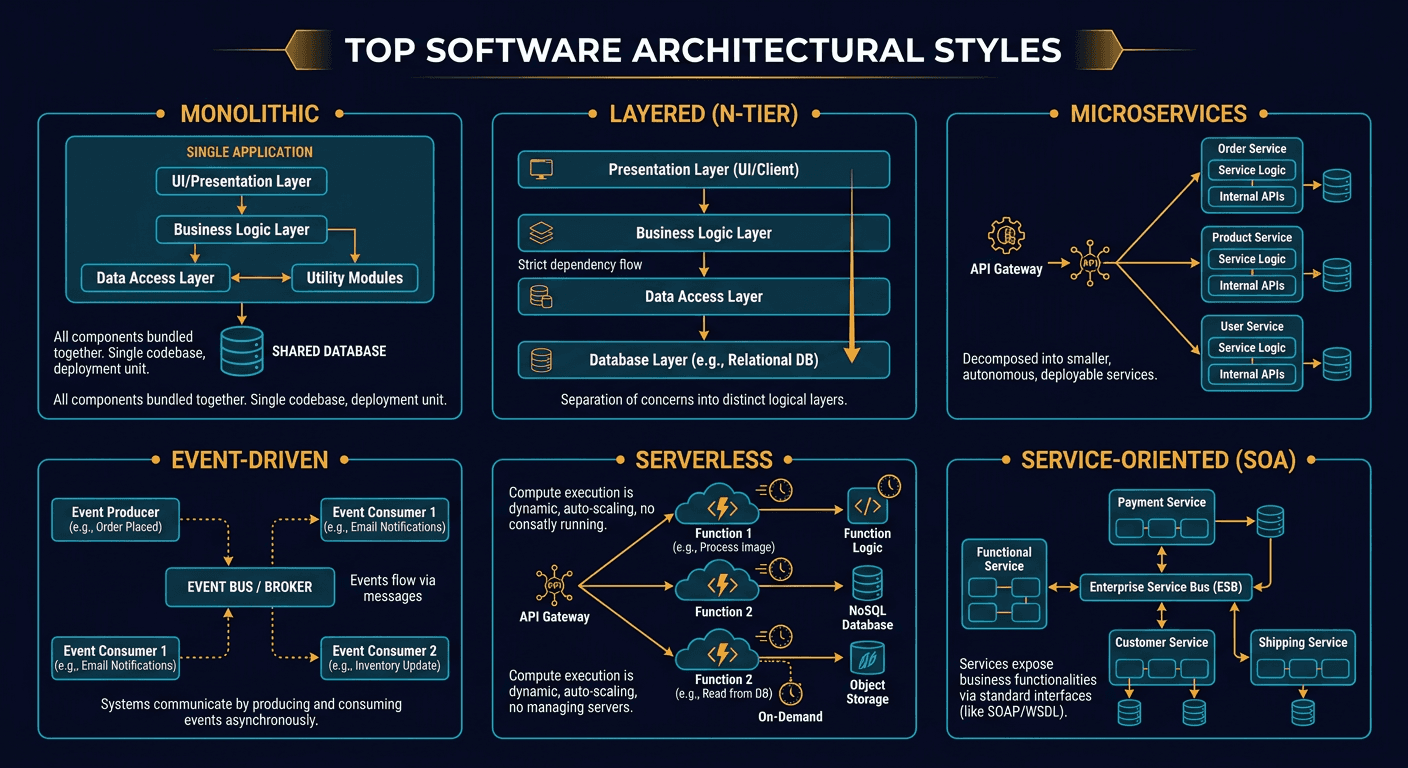
Software architectural styles define the high-level structure and organization of a system, impacting its scalability, maintainability, and overall performance. Choosing the right style is critical for meeting non-functional requirements and avoiding architectural drift as the system evolves.
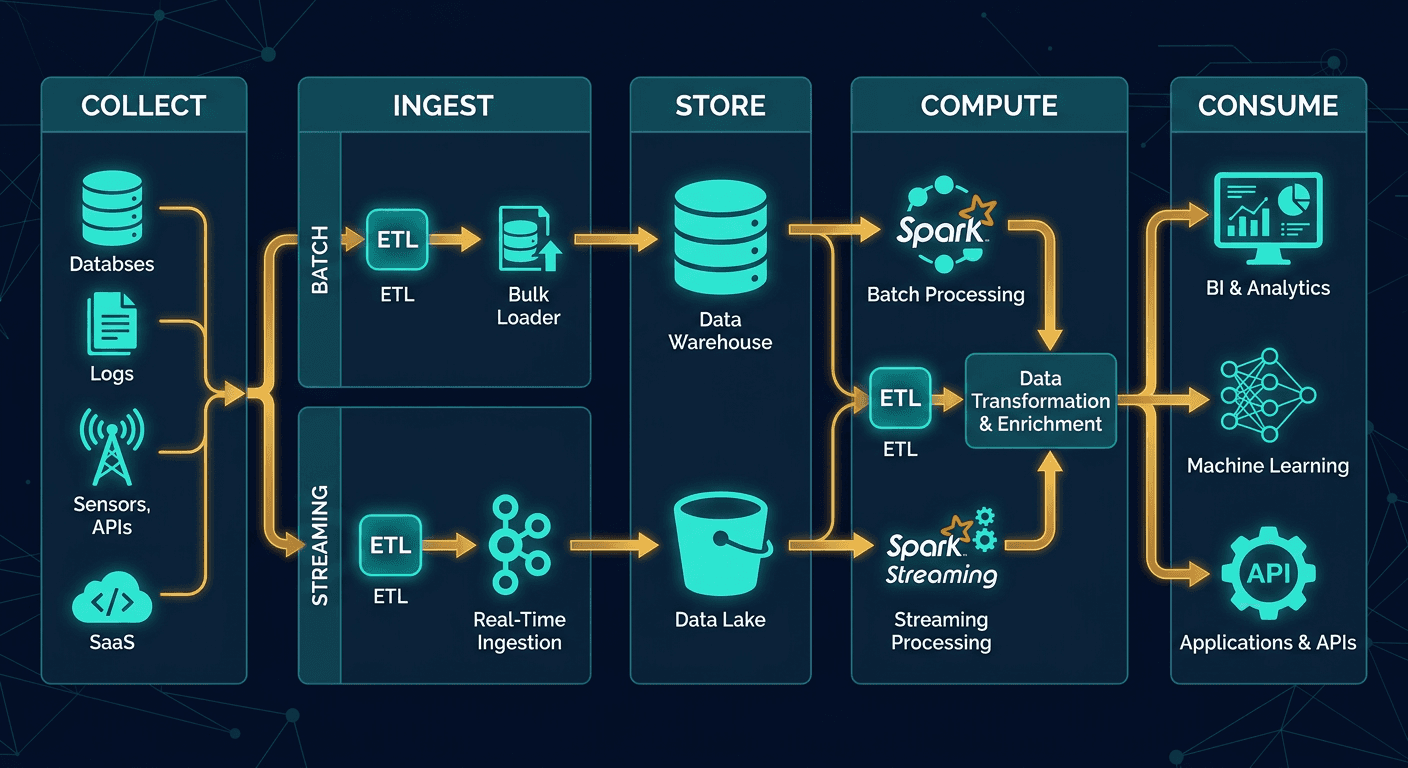
Data pipelines automate the flow of data from source systems to destinations, enabling analysis and decision-making. They address the challenge of integrating data from disparate sources, transforming it into a usable format, and delivering it reliably to downstream systems.
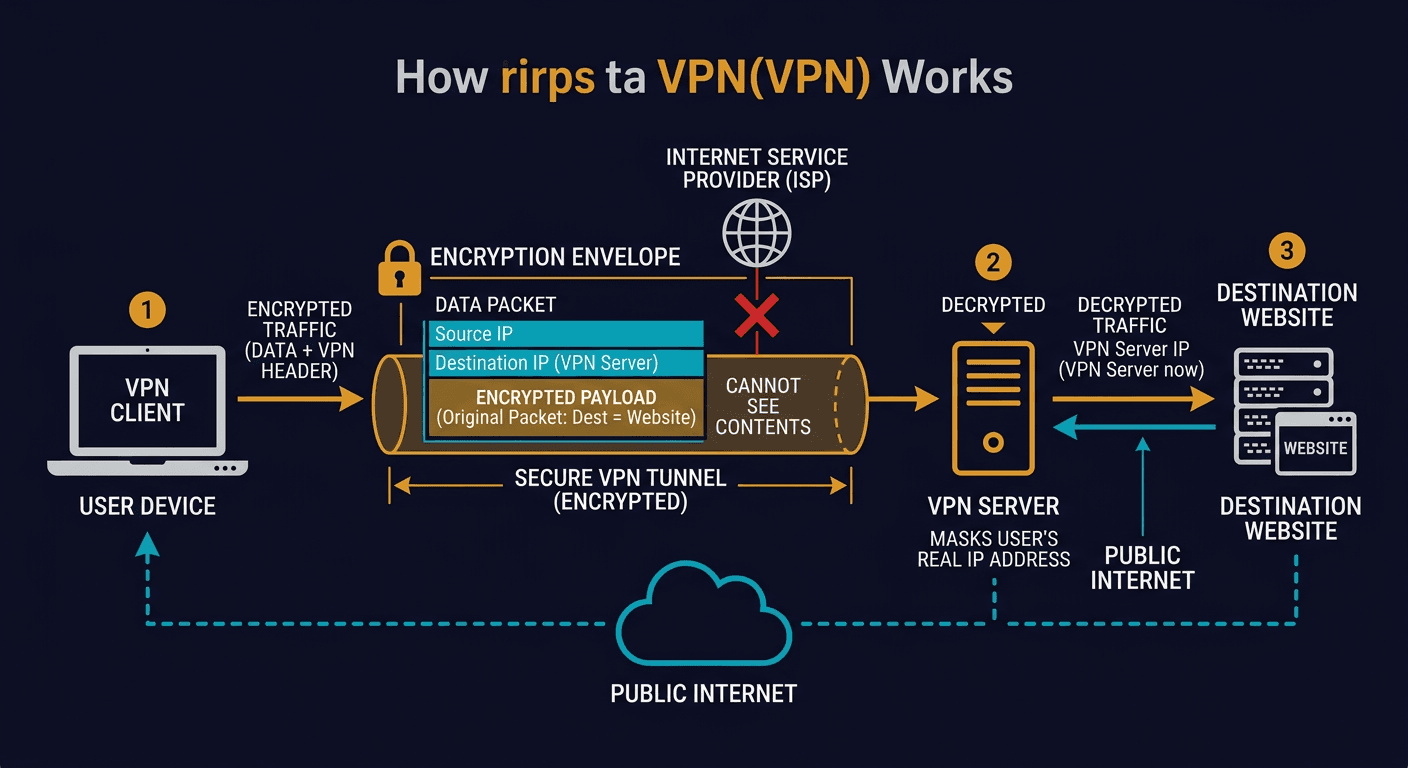
A VPN establishes an encrypted tunnel between a client and a server, masking the client's IP address and encrypting traffic to ensure privacy and security. This prevents eavesdropping and allows users to bypass geo-restrictions, but introduces latency and relies on the VPN provider's security practices.
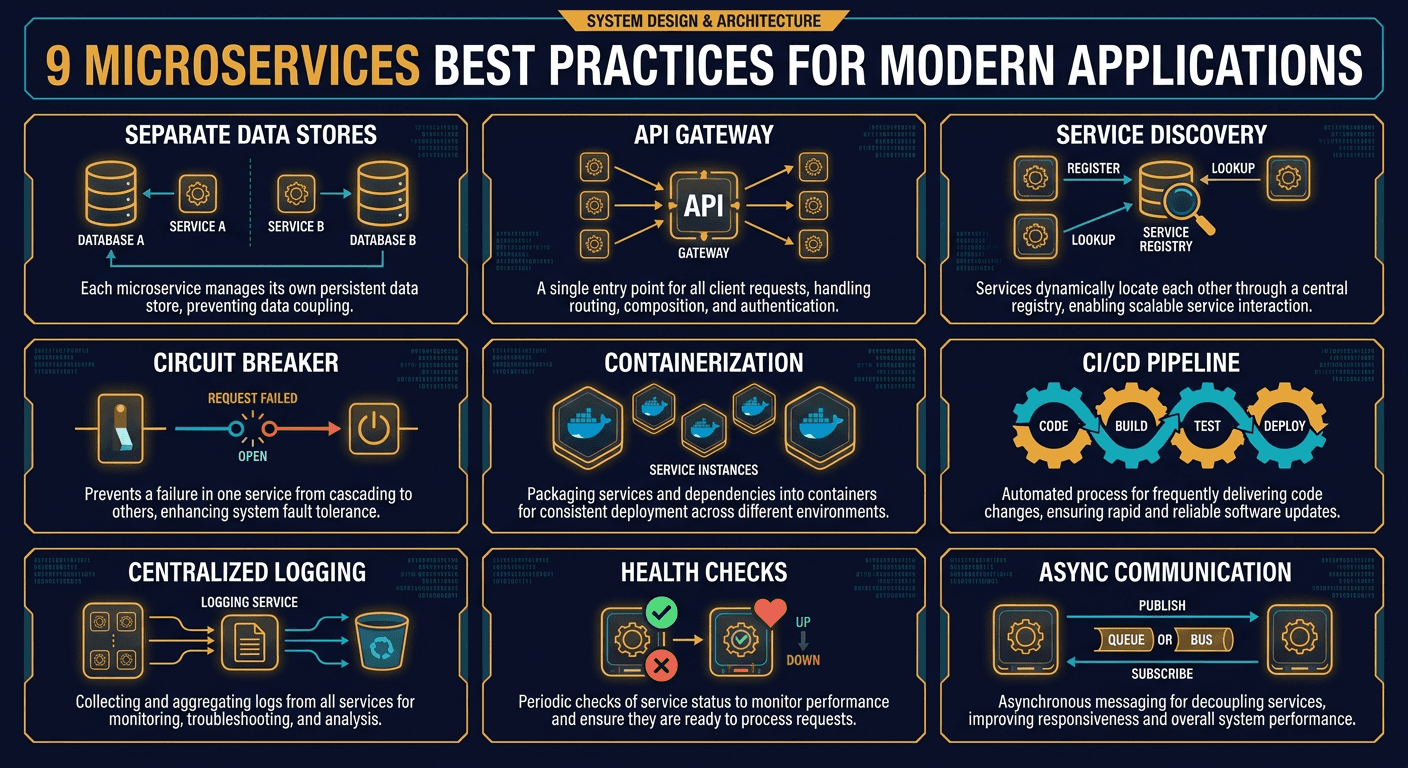
Microservices decompose applications into independent, deployable services, increasing agility but introducing distributed systems challenges. Key best practices focus on data isolation, bounded context, and observable communication to ensure resilience and maintainability.
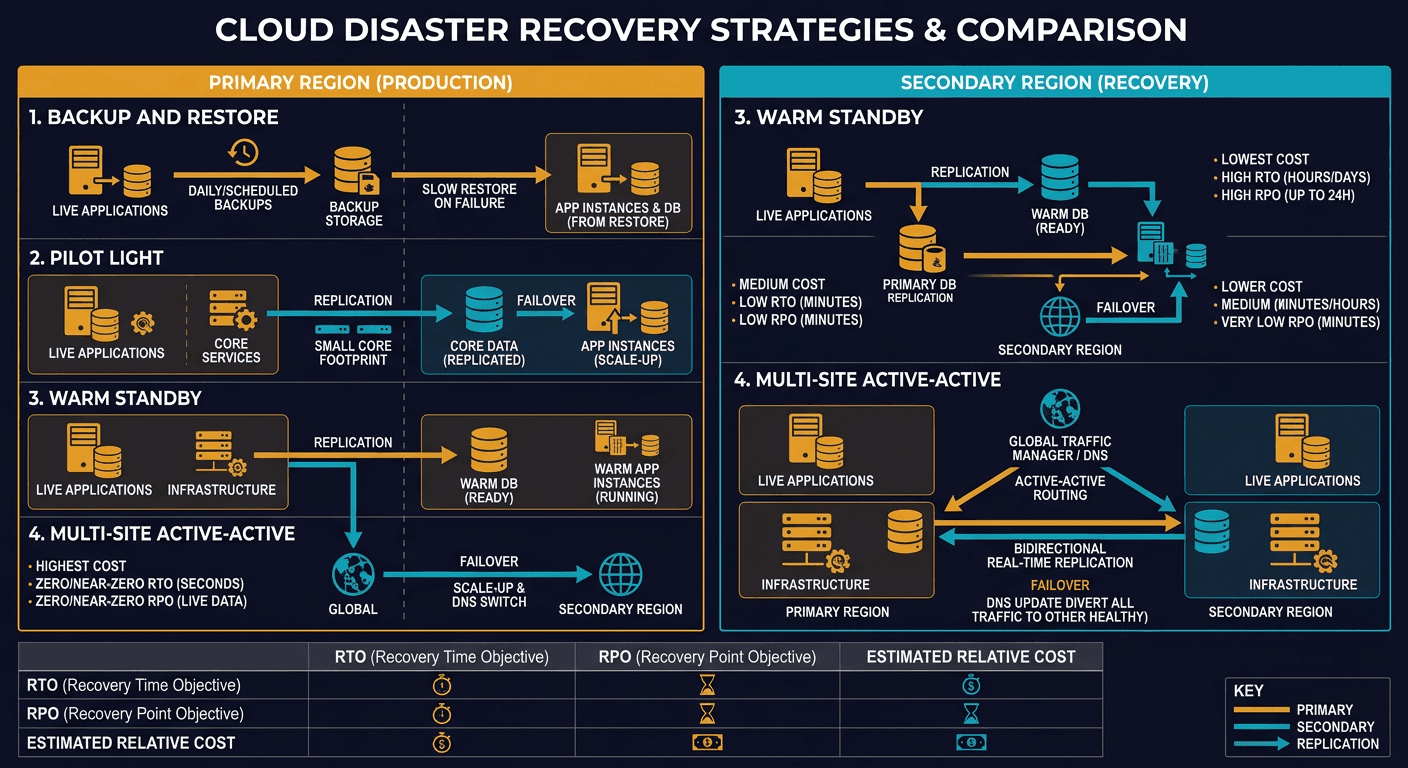
Disaster recovery strategies ensure business continuity by minimizing downtime and data loss during disruptive events. Choosing the appropriate strategy involves balancing recovery objectives (RTO/RPO) with cost and complexity, often leveraging cloud-native replication and failover mechanisms.
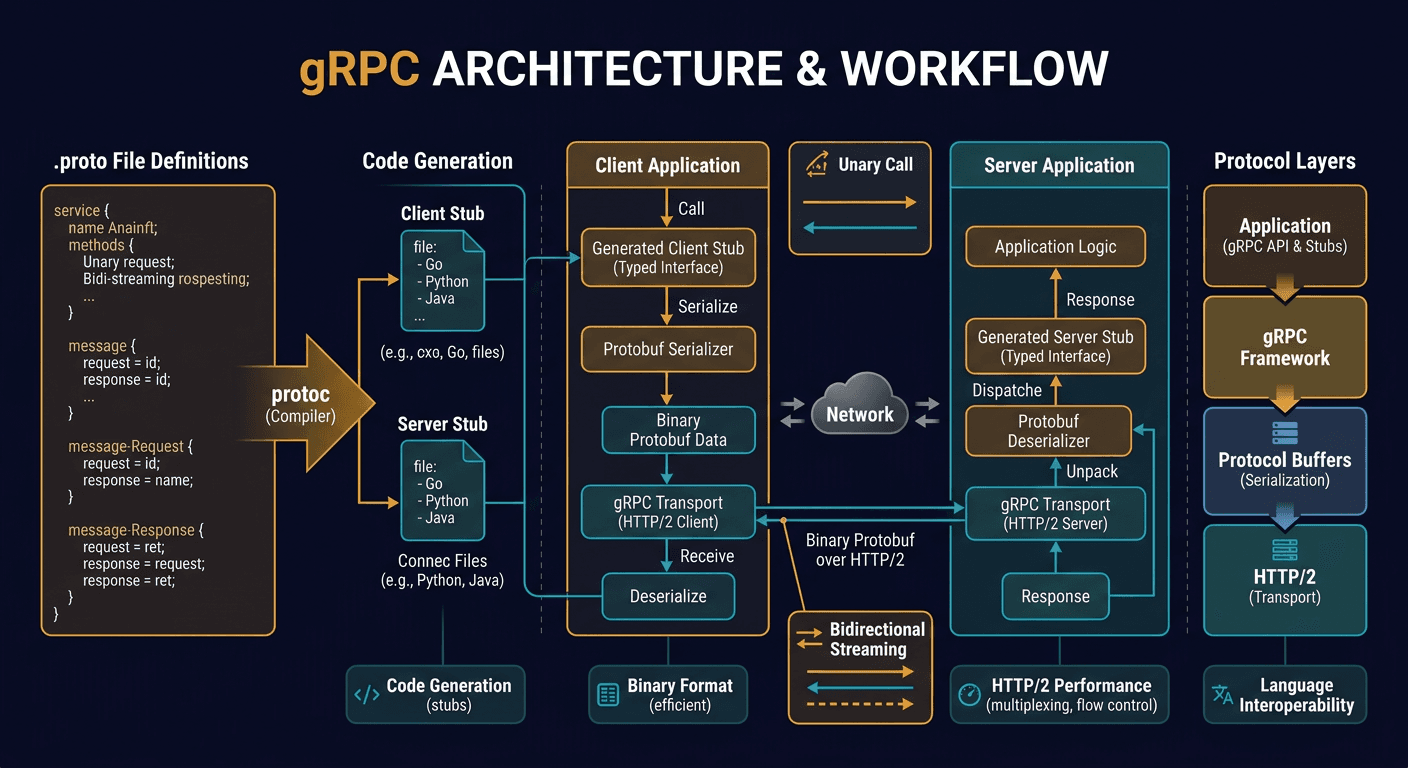
gRPC addresses the need for high-performance, strongly-typed communication between services, particularly in microservice architectures. It provides an efficient alternative to REST by leveraging Protocol Buffers for serialization and HTTP/2 for transport, optimizing for speed and reducing latency.
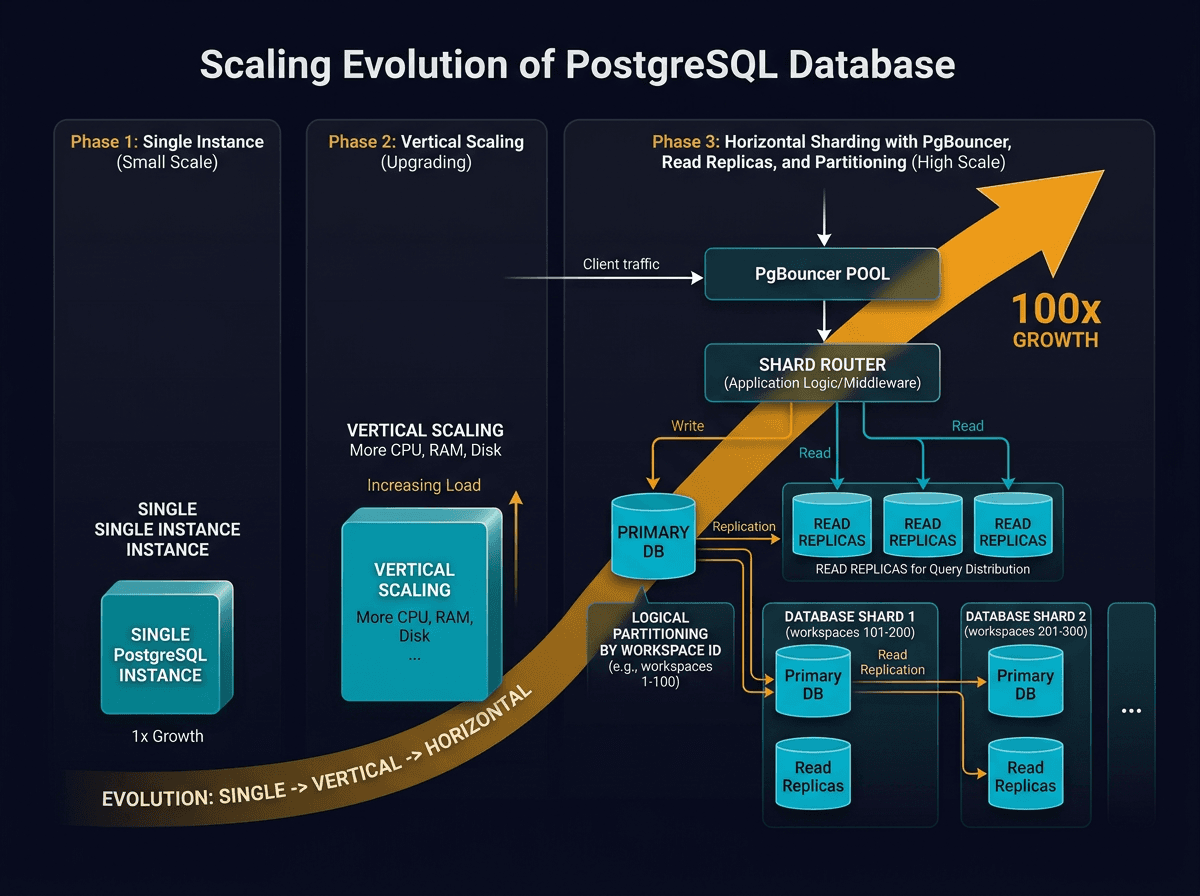
Figma achieved 100x Postgres scaling by combining vertical scaling, read replicas, connection pooling via PgBouncer, database proxies, and sharding to handle exponential growth. Their strategy involved both functional and horizontal partitioning to address performance bottlenecks at different stages.
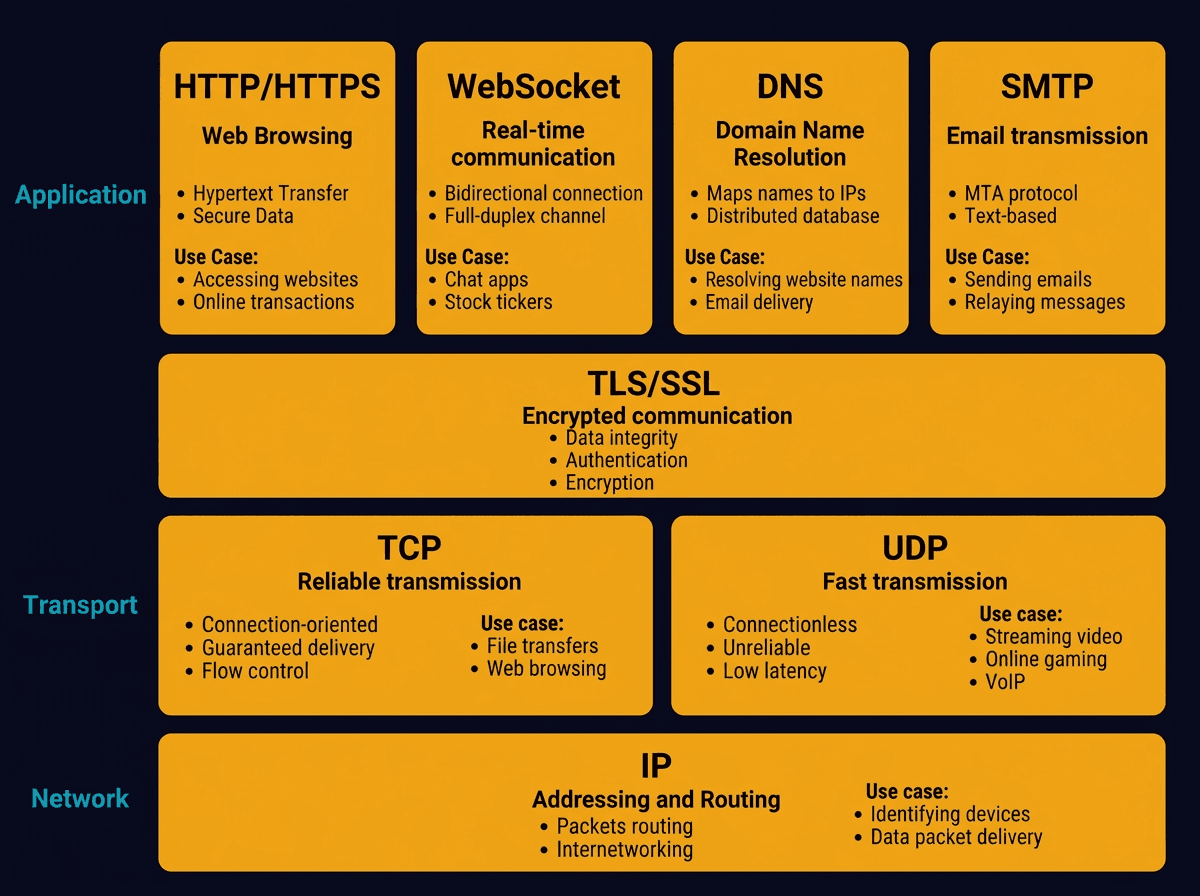
Network protocols are sets of rules governing data exchange between devices. Choosing the correct protocol impacts system performance, reliability, and security; understanding their trade-offs is essential for system design.
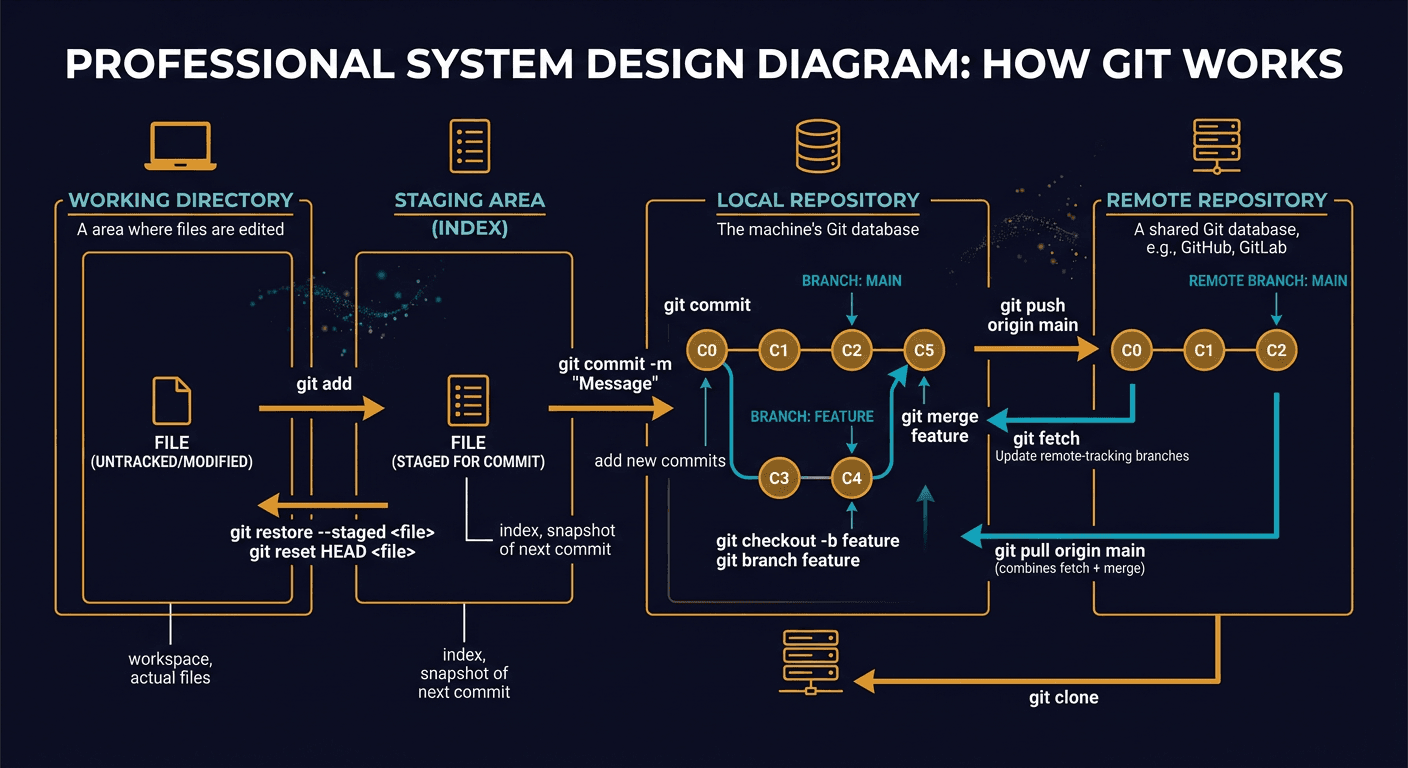
Git solves the problem of coordinating changes to files among multiple people, preventing chaos and data loss. It provides a robust system for tracking modifications, reverting to previous states, and merging concurrent efforts into a unified codebase.
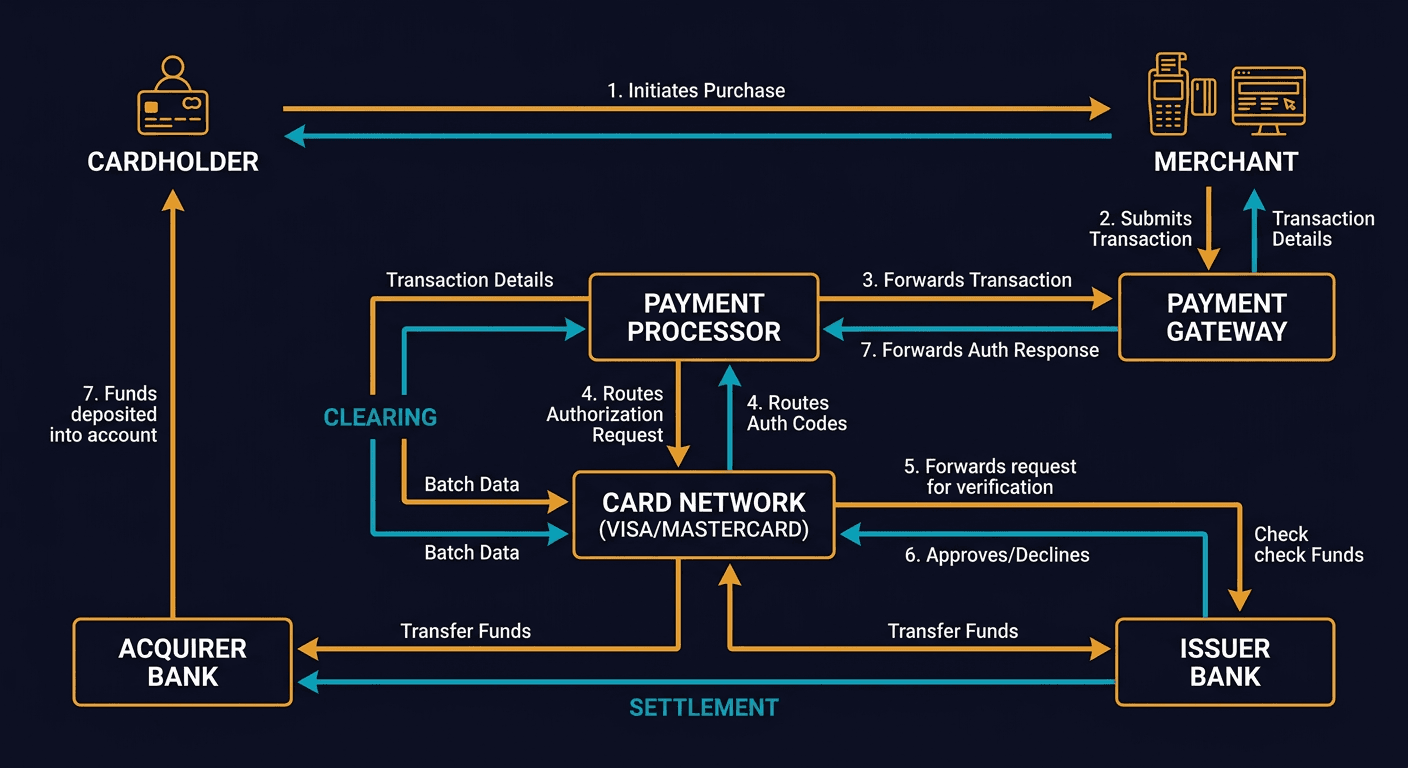
The payments ecosystem is a multi-layered architecture involving various entities and protocols to facilitate secure and reliable fund transfers. Its complexity arises from the need to balance speed, security, and regulatory compliance across diverse financial institutions.
Software architectural styles define the high-level structure and organization of a system, impacting its scalability, maintainability, and overall performance. Choosing the right style is critical for meeting non-functional requirements and avoiding architectural drift as the system evolves.
Data pipelines automate the flow of data from source systems to destinations, enabling analysis and decision-making. They address the challenge of integrating data from disparate sources, transforming it into a usable format, and delivering it reliably to downstream systems.
A VPN establishes an encrypted tunnel between a client and a server, masking the client's IP address and encrypting traffic to ensure privacy and security. This prevents eavesdropping and allows users to bypass geo-restrictions, but introduces latency and relies on the VPN provider's security practices.
Microservices decompose applications into independent, deployable services, increasing agility but introducing distributed systems challenges. Key best practices focus on data isolation, bounded context, and observable communication to ensure resilience and maintainability.
Disaster recovery strategies ensure business continuity by minimizing downtime and data loss during disruptive events. Choosing the appropriate strategy involves balancing recovery objectives (RTO/RPO) with cost and complexity, often leveraging cloud-native replication and failover mechanisms.
gRPC addresses the need for high-performance, strongly-typed communication between services, particularly in microservice architectures. It provides an efficient alternative to REST by leveraging Protocol Buffers for serialization and HTTP/2 for transport, optimizing for speed and reducing latency.
Figma achieved 100x Postgres scaling by combining vertical scaling, read replicas, connection pooling via PgBouncer, database proxies, and sharding to handle exponential growth. Their strategy involved both functional and horizontal partitioning to address performance bottlenecks at different stages.
Network protocols are sets of rules governing data exchange between devices. Choosing the correct protocol impacts system performance, reliability, and security; understanding their trade-offs is essential for system design.
Git solves the problem of coordinating changes to files among multiple people, preventing chaos and data loss. It provides a robust system for tracking modifications, reverting to previous states, and merging concurrent efforts into a unified codebase.
The payments ecosystem is a multi-layered architecture involving various entities and protocols to facilitate secure and reliable fund transfers. Its complexity arises from the need to balance speed, security, and regulatory compliance across diverse financial institutions.
From DSA to system design, behavioral to GenAI. Comprehensive AI coaching for every interview type.
Start with brute force, end with the optimal solution. The AI guides you through every step across 7+ languages.
18-stage guided interviews with interactive Excalidraw diagrams. Walk into your system design round with zero anxiety.
STAR methodology with adaptive tone coaching. Practice leadership, conflict, and teamwork stories until they flow naturally.
Run code in Python, JavaScript, Java, C++, Go, Rust, and Ruby with instant feedback and analysis.
Real-time Excalidraw whiteboard and Mermaid diagrams for system design visualization.
Speech-to-text input and text-to-speech feedback. Practice like a real interview conversation.
Data structures, sorting, graphs, DP
Distributed systems, scalability, trade-offs
STAR method, leadership, teamwork
LLMs, RAG, fine-tuning, agentic architectures
Values alignment, company culture
Pitch handling, objection management
No more talking to yourself in the mirror. Our voice AI conducts adversarial interviews that feel like the real thing.
Pick from 19+ interview categories and expert AI personas that match your target role.
AI coaches you through realistic mock interviews with real-time feedback.
Track your progress, identify weak spots, and level up until you are interview-ready.
Pay per session or subscribe monthly. No hidden fees, no commitment.
30 min of coaching
3 hours of coaching
10 hours of coaching
Or subscribe monthly from $9.99/mo for recurring credits and savings.
This thing grilled me harder than my actual Google L5 interviewer. I went in nervous and came out confident.
The system design walkthroughs are better than any course I have taken. The AI catches gaps in my reasoning that I did not even know existed.
Voice interviews made me realize I was saying 'um' every 5 seconds. After two weeks of practice, I aced my Amazon loop.
Start practicing with AI coaches that adapt to your level and give you real-time feedback.
Free credits to get started. No credit card required.
LeetCode gives you problems and a compiler. PrepCity gives you a senior engineer who teaches, challenges, and adapts. Our AI coach walks you through brute force to optimal, explains trade-offs, runs your code, and evaluates your communication - not just correctness.
System Design (10-stage guided walkthroughs with diagrams), DSA/Coding (6-stage teaching with code execution in 7 languages), Behavioral (STAR methodology), GenAI/Agents (LLMs, RAG, fine-tuning, agentic architectures), Mock Interviews (adversarial full-loop simulation), and Voice Interviews. We also support Sales, Legal, Cultural Fit, and 10+ other categories.
Yes. Our voice interview feature uses professional-grade AI speech with sub-200ms latency. The AI interviewer speaks naturally, listens to your responses, follows up with probing questions, and gives you a detailed evaluation with per-question scoring when you finish.
For each topic, the AI generates a comprehensive knowledge base, then guides you through it stage by stage. For coding problems, it teaches from brute force to optimal. For system design, it covers 10 sections from requirements to trade-offs. It adapts to your level and challenges you on weak spots.
You can purchase more credit packs starting at $7.99 for 30 minutes, or subscribe monthly from $9.99/mo for recurring credits with 20% savings. Your conversation history and progress are always saved. The library and problem solutions are accessible without credits.
Yes. Your conversations, documents, and interview recordings are encrypted and never shared with third parties. We use your resume and job description only to personalize coaching. You can delete your data at any time from Settings.
Get system design breakdowns, coding patterns, and behavioral frameworks delivered to your inbox every week.
No spam. Unsubscribe anytime.